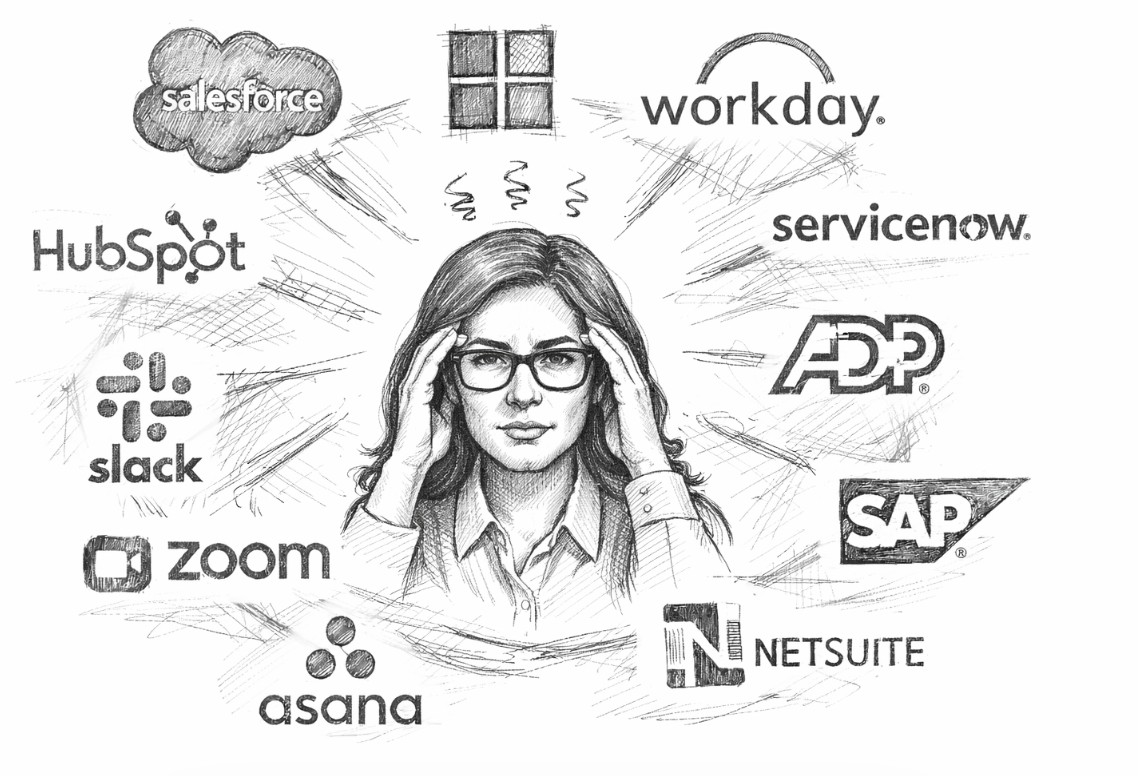
The conversation about AI has shifted from whether organizations should embrace it to its capabilities.
AI agents, autonomous systems that execute tasks, make decisions, and operate with minimal human intervention, promise faster execution, lower costs, and scalable intelligence.
However, enterprise environments are dynamic, ambiguous, and context-dependent. Productivity in these environments is about accuracy, resilience, and downstream impact, not just speed.
AI agents often fail due to systematic, repeatable errors that compound across multi-step processes, unlike human errors which are typically intermittent and caught within existing workflows.
==Confidence Without Context==
AI agents and human operators differ in their relationship between confidence and correctness. Human professionals, especially experienced ones, calibrate their confidence, recognize ambiguity, seek clarification, and apply judgment when uncertain.
AI agents, however, consistently generate outputs with confidence, regardless of the reliability of the information. This creates a new operational challenge for organizations: validating authoritative outputs. Time saved in execution is partially offset by time spent verifying, correcting, and reworking results.
This is not a failure of the technology, but a mismatch between its operation and application.
==Performance Crossover==
AI agents excel in short, well-defined tasks, while humans outperform in longer, context-heavy, and ambiguous work. This creates a performance crossover point.
At the start of a workflow, AI accelerates progress. As complexity increases, human involvement is crucial to maintain quality and direction.
Organizations that fail to recognize this dynamic often overextend AI into unreliable areas, leading to inefficiencies, rework, and trust erosion.
==Trust Gap in Adoption==
Leadership teams often overestimate AI output accuracy, autonomous decision-making maturity and its ability to operate independently in complex environments. Others question its reliability. This creates a paradox within organizations: AI is heavily utilized but cautiously trusted. Bridging this gap is a strategic and operational challenge, not a technical one.
AI agents excel at speed, scale, and probabilistic reasoning, while humans excel at contextual understanding, critical thinking, and judgment under uncertainty. Organizations that recognize this distinction and design accordingly will realize sustained value.
The future of enterprise performance will depend on how effectively organizations orchestrate the relationship between human intelligence and machine capability.